
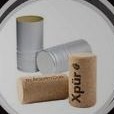

Amorim's Prices, Our Attention
We were trained by Amorim in Portugal and California, and we work hand in hand with Amorim's own staff. You get the manufacturer's corks at the manufacturer's prices, and someone who knows your wine, your bottle and your bottling line.
- You pay Amorim's prices. Amorim makes your corks and arranges billing and shipping.
- We handle product selection: the right cork for your wine, your bottle and how long it will age.
- We support you from samples to the bottling line.
- We advocate for you with the manufacturer. If something isn't right, we work it out with Amorim on your behalf.
- No customer is too big or too small. We will work with your minimums.
No plastic filler. None of our corks use plastic fillers. What is agglomerated cork?
Pick Your Cork
Two questions, and we'll point you to the corks we'd look at first. Conservative picks from our cork aging guide.
About 5 years: Naturity, NDtech, Xpür 44 mm, Twin Top, Qork 44 mm
How Ordering Works
- Tell us about your wine: the wine, the bottle and its neck, how long it will spend in the bottle, and your annual quantity.
- Try samples. Untreated samples come with a quote, or we'll send treated, ready-for-bottling samples for a trial beside the cork you use now.
- Authorize the order. Amorim makes your corks, printed or plain, and arranges billing and shipping.
- Delivery. In general, three weeks from order authorization to delivery is the norm.
Printing Your Corks
- Side art is whatever you like.
- Fire brands on the ends, and vintage brands on the cork ends are free.
- Our capabilities include food-grade ink, fire and laser.
- Printed corks involve one-time die charges, because Amorim does not make the die.
Which Cork Are You Looking For?
| Closure | Type | Best for |
|---|---|---|
| Naturity natural cork | One-piece natural cork | Reserve and premium wines meant to age, 10 to 20 years |
| NDtech | Natural, individually TCA tested | Premium wines where no TCA risk is acceptable; 49 mm up to 30 years |
| Acquamark | Natural with water-based coating | Real cork at a lower cost, up to 3 years |
| Twin Top & Twin Top EVO | Technical: agglomerate body, natural discs | Up to 5 years (EVO up to 7) |
| Neutrocork & Xpür | Micro-agglomerate (Xpür-treated option) | Neutrocork up to 3 years; Xpür 44 mm about 5, 49 mm 7 to 10 |
| Qork | Organic micro-agglomerate with Xpür | The greenest micro-agglomerate; 44 mm about 5 years, 49 mm about 7 |
| Spark, Spark Top One & Spark One Xpür | Sparkling (Spark One Xpür: Xpür-treated micro-granulated) | Champagne and sparkling wine |
| Neutrocork Beer | Micro-agglomerate, beer diameter | Brewers using 750 mL bottles |
| TOPSERIES bartops | T-cork, stock or custom | Spirits and fortified wines |
In nearly a decade in the U.S. we've placed hundreds of millions of Neutrocork closures without complaints. If only bottles were so reliable!
New Processes Protecting Your Product


Naturity (for natural corks) and Xpür (for micro-agglomerated stoppers) deliver non-detectable TCA performance across different wine price points. Xpür uses supercritical CO2 to cleanse cork's cellular structure deeply while keeping cork's natural characteristics intact.
100% natural: Naturity corks are available with a beeswax coating, natural cork finished with natural beeswax. About the beeswax coating
Why Real Cork?

- Preserve or create the perception of product quality with a closure made from cork
- Cork forests cover only 1.2% of the planet's land, while their high metabolism absorbs over 4% of the CO2 from fossil fuels each year
- 100% natural, renewable and recyclable
- The bark regrows; no tree is cut down
- By using natural cork, you are keeping CO2 out of the atmosphere
For the full story, read Cork 101. And don't forget the capsules. As a company, Amorim is among the top 50 Sustainability & Climate Leaders.
Buying Amorim Corks: Questions
Is ENOTOOLS a reseller?
No. We are Amorim's manufacturer's representatives, a factory-trained sales and service agency, partnered with Amorim since 2007, with the full support and service potential of full-time Amorim staff members. Amorim makes your corks and arranges billing and shipping. We handle product selection, support and customer advocacy with the manufacturer, and you pay Amorim's prices.
Who makes and ships my corks?
Amorim. Billing and shipping are arranged by Amorim.
What's the minimum order?
No customer is too big or too small. We will work with your minimums.
How long does a cork order take?
In general, three weeks from order authorization to delivery is the norm.
Can my corks be printed?
Yes. Side art is whatever you like. We offer fire brands on the ends, and vintage brands on the cork ends are free. Our capabilities include food-grade ink, fire and laser. Printed corks involve one-time die charges, because Amorim does not make the die.
What size cork do I need?
Tell us your bottle. Amorim can calculate the required cork diameter by studying the internal profile of your bottleneck, the characteristics of the wine and your corking conditions. Length follows how long the wine will age: see the cork aging guide.
Can I try corks before I buy?
Yes. Untreated samples come with a quote, or we'll send treated, ready-for-bottling samples, printed or unprinted, for a trial side by side with the cork you use now. Request a trial.
What if I have leaking corks or a cork taint complaint?
Call us. Customer advocacy with the manufacturer is part of what we do: we work the problem with Amorim on your behalf. Most leaks start at the bottling line, so our corking checklist is a good first look at storage, headspace and corker jaws.
Do your corks have plastic in them?
No plastic filler. None of our corks use plastic fillers.
Questions About Amorim's Cork Treatments
What is ROSA?
ROSA (Rate of Optimal Steam Application) is Amorim's patented steam treatment, in use since 2004. Controlled steam distillation pulls TCA and other volatile compounds out of cork granules, so it's the treatment behind agglomerated and micro-granulated corks like Neutrocork and the body of the Twin Top. In 2007 and 2008, Amorim adapted it for natural corks as ROSA Evolution: controlled vapor that uses less energy and doesn't deform a one-piece cork.
What is NDtech?
NDtech is individual screening. In a few seconds, every single natural cork is analyzed for TCA, and any cork releasing more than 0.5 ng/L is pulled from the supply chain. Amorim compares 0.5 ng/L to a drop of water in 800 Olympic swimming pools. They spent six years and 12 million euros developing it, and it gave the world its first natural cork with non-detectable TCA performance. More on NDtech corks.
What is Naturity?
Naturity is Amorim's TCA treatment for natural corks, developed starting in 2016 with the School of Science and Technology at NOVA University Lisbon. It works by thermal desorption: pressure, temperature, purified water and time drive TCA and other volatile compounds out of the cork without damaging its cells, and without anything artificial. The result: 99% of corks at or below 0.5 ng/L releasable TCA, and the rest at or below 1.0 ng/L. More on Naturity corks.
What is Xpür?
Xpür treats micro-granulated cork with supercritical CO2. It removes TCA, the other haloanisoles (TeCA, PCA and TBA), and hundreds of other volatile and semi-volatile compounds, while cork's elastic, physical-mechanical properties stay intact. The result is non-detectable TCA: releasable TCA at or below the 0.3 ng/L detection limit. Amorim says it uses 75% less energy and 90% less CO2 than conventional technology. Xpür corks, Qork and Spark One Xpür all get this treatment. More on Neutrocork and Xpür.